All posts by Quinnan Stone

Giveaway Winners

Day One cat mug is Denise McSpadden

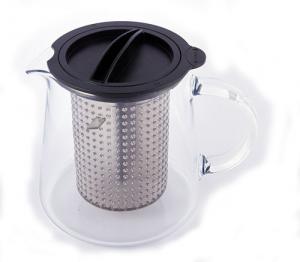
Day Two brew control teapot is Richard Spreadbury

Day Three match bowl is Sallie Wall

Day Four Zen Cupset Hungar

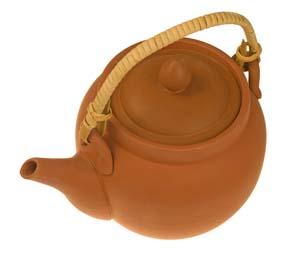
Day Five clay teapots is Yuzu Manchester and Lucas Stolarczyk

Day Six set of tins is Joanna Brown

Day Seven is Jax Blunt

Congratulations to you all and a big thank you to everyone who joined in.

Prizes will be with you by the end of the week (Royal Mail willing!)

That Time Of Year Again

December marks the anniversary of the start of More Tea.

Regular customers/readers will know that this means our birthday sale starts on Monday 2nd December and runs through to midnight on Sunday 8th.

I had so much fun with the give-aways last year that we are going to do it again this year. Starting on Monday and carrying on each day next week, we will be having a daily draw. You can enter each days draw by commenting on that days blog post, by +1 or commenting on our Google Plus posts. Re-tweeting or replying to our Twitter posts, by emailing or by placing an order. At the beginning of the next day we will put all the names in a hat draw a winner and announce the next give away.

If you are thinking about giveing the gift of tea or don’t have enough of your favourite teas to make it through to next year, our last posting dates and Festive shutdown information can be found here

Have a great weekend people.

Tea Hero – Sir Thomas Lipton Part 2.

Lipton’s hard slog years: realising the dream; becoming the man.

In the first part of Tommy Lipton’s story we saw him depart for the USA as a callow youth and four years later return to Glasgow having learned some valuable life skills, with US$ 500 in his pocket, an iconic bushy moustache and the dream of building a grocery empire.

Tommy made his homecoming truly triumphant – it was talked about afterwards for months – he had brought back for his mother a barrel of flour and a rocking chair so, hiring a horse cab, he tied these to the roof and paid the driver to drive slowly through the neighbourhood while he leaned out of the window shouting greetings and waving to all. That exultant return was on Saturday, but on the following Monday he was again working as his father’s assistant in the family basement grocery shop, and the slow pace of work after a bustling New York department store deadened him. He agreed with his father that “Quality tells” – but quality told all too slowly for Tommy’s liking. He had seen marketing in full swing in America and had plans to shake the public, to amaze them, to entrance them . . . but his father had no time for smart Yankee ways in his shop. Tommy needed to open a second shop on his own account.

Tommy always carried with him a few pounds in gold sovereigns – he believed in the motivating effect of a cash down payment – and, passing the Glasgow dock area heard of a ship from Philadelphia that had been delayed by bad weather. The owners were selling off the cargo on the quay to ensure a swift turnaround and Tommy bought a consignment of hams and bacon which he managed to sell in town and make an £18 profit. This set him thinking; if he could do this with a small outlay think what he could make from investing £100. And if one shop could make £5 a week he reasoned with his parents, two could make £10 and twenty could make £100 – why not a shop in every town in Scotland? But Tommy’s father, having dragged himself up from poverty to the security of his own tiny shop was not minded to risk expansion. Not so his son who, in 1871 on his 23rd birthday and with his mother’s blessing unrolled his plan and opened up his first shop – in a classier suburb of Glasgow than his parent’s shop. Typically Tommy always with an eye to a good news story told the local papers that it was his coming of age 21st birthday.
130 years before dot com booms, bankers’ bonuses and football superstars, money had to be made slowly and by hard work. In Tommy’s case by very hard work – and advertising – and “stunts”. It took him 30 years to build his shop empire – “softly, softly, catchee monkey!” – and his business methods were always impeccable. He was never accused of any dodgy dealing, he never borrowed money, he paid cash on the nail, he lived for his work and he re-invested every penny into the business. In his autobiography (published a year after his death) he remembered “I worked late and early. I was manager, shopman, buyer, cashier and messenger boy. If I had provisions to collect off the Irish boat I went down to the quay early in the morning with a handcart; if customers wanted goods delivered I would shut up the shop temporarily and take them in person”. After closing time he would work on the accounts and think up new selling ideas. Occasionally, dog tired, he would sleep the night under his own counter.

Tommy Lipton had several secrets to success. He sold good quality goods at lower prices than his competitors – by underpaying himself and (this was to become his slogan) by cutting out the middleman. He went straight to producers and bought for cash on the spot. But perhaps his most successful “secret” was showmanship. His shop was bright and attractive and he commissioned a weekly cartoon poster for the window. A memorable one was an Irishman carrying a weeping pig over his shoulder, while explaining to an onlooker that the pig was an orphan as all the rest of the pig’s family had gone to Lipton’s and out of pity he was taking him there too! Soon Tommy acquired large two porkers that he scrubbed and tied ribbons in their tails and had them driven though Glasgow – a different route each day – under the banner “Lipton’s Orphans” and painted on their sides “I’m going to Lipton’s, the best shop in town for Irish bacon”.

Tommy Lipton’s first shop assistant William Love started work on a six month contract but before it expired he had opened a second shop and the assistant became assistant manager – and remained as Lipton’s right hand man and fixer for 40 years.
Lipton was a genius at promotion and later in his career would refer to himself – in the style of a circus performer – as The Great Lipton. In 1877 a typical Lipton stunt was having fake bank notes printed and handed out in the streets declaring “I promise to give on demand in any of my establishments HAM, BUTTER and EGGS as given elsewhere to the value of one pound, for fifteen shillings”. An ingenious discount that generated a mass of trade; however fraudulent passing of Lipton’s fake but very realistic notes resulted in several court cases and Tommy obligingly withdrew them; but they had amply achieved their purpose.
By the start of the 1880s Lipton had shops in a dozen northern cities and their citizens, egged on by the press, were constantly wondering “What Lipton’s would be doing next?” Perhaps the most talked about of hundreds of stunts was the import of the largest cheeses ever made. In 1881 amidst great publicity at every stage he ordered two three tonne cheeses to be made in America. The public was fascinated by the production of these monsters and Tommy fed the newspapers minute by minute details – 4,000 gallons of milk was required; 800 cows were milked for 6 days; 200 milkmaids were employed; world cheese experts were consulted. The huge cheeses were destined for Christmas sale in Glasgow and Edinburgh. The Edinburgh cheese first travelled south from Glasgow Port by rail and was displayed for a week at the London Royal Aquarium, the Victorian equivalent of the O2 Arena, and famous for attracting crowds to concerts, plays and circus acts.

The Glasgow cheese, by now dubbed “Jumbo” after an 18ft tall celebrity elephant at London Zoo, was hauled from the dock by traction engine at maximum speed (then 4 mph with a man walking ahead with a red flag) and quickly attracted a thousand followers, eager to see what Lipton was up to now. However on reaching his flagship High Street shop it was discovered that the door was too narrow, and so was the window. Lipton, sitting astride the cheese announced that it would now be displayed at his larger Jamaica Street shop, and so the entourage again slowly proceeded across Glasgow, stopping traffic and attracting publicity throughout the day.

When Jumbo was installed Lipton worked on how to milk further publicity from his cheese. His plan was to cut and sell it on Christmas Eve and to ensure a crowd advertised that, like the traditional silver threepences in Christmas puddings, Lipton’s Jumbo would contain gold sovereigns. On Christmas Eve a mass of customers crowded round the shop, controlled by special squad of policemen. Tommy Lipton, wearing his trademark black suit and crisp white apron personally cut cheese for eager customers who immediately rummaged through their purchase. Every time the shout went up that a gold coin had been found more customers crowded in while those who had been unlucky pressed through the doors to purchase more. Within two hours every crumb of the three tonne cheese was sold.

Giant cheeses containing gold coins were to become a feature of Lipton shops at Christmas for many years after and always with a new publicity angle. In 1893 at the Chicago Fair Lipton caused a stir by purchasing the Canadian exhibit – this time a twelve tonne cheese – but on subsequent arrival in Glasgow this monster proved by its aroma to be well past its best by date. Lipton rejoiced in the publicity, and claimed on the insurance.

Twenty years of building his fleet of shops hardly changed Tommy Lipton; every month his business grew larger and his workload was undiminished. But the source of his encouragement; his beloved and devoted mother was aging and died at 80 in the autumn of 1889. Tommy was distraught at her loss and threw himself into work even harder. When in the following spring his father also died Tommy was advised to take a holiday. He complied and booked a passage to Australia. History shows however that he had other plans than to take a restful vacation – he had sent ahead an aide to sound out commercial prospects in Ceylon (now Sri Lanka) where he broke his voyage.

While Lipton’s grocery shops were best known for their Irish hams, eggs, butter and cheese they naturally supplied other provisions too – sugar, jams, meat pastes, coffee – and tea. In those days tea was displayed in bulk and weighed and packed to order. Lipton purchased his tea as he did his sugar, from an importer. What he discovered in Ceylon was to change his company, his life, and certainly the history of tea. Ceylon like China and India exported tea to Great Britain but was very much the new boy on the block. Ceylon had been a coffee growing country until coffee rust devastated the crop and was just picking up speed as a tea producer. Agricultural land prices were still depressed from the coffee crash and Tommy had gone on “vacation” with £75,000 to invest…

In Part Three: Lipton turns Ceylon tea into a brand – and emerges as a socialite.

Tea Hero – Sir Thomas Lipton Part One

Lipton Tea, in the distinctive yellow and red box, is instantly recognised in 180 countries throughout the world. Even a hundred years after his heyday Sir Thomas J Lipton is remembered for the shrewd entrepreneurial streak that made him millions, his publicity stunts, his hob-nobbing with royalty, and his many challenges for the America’s Cup. But what exactly made Tommy Lipton the man, ‘tick’, is as Churchill said of Russia’s intentions in 1939 “a riddle, wrapped in a mystery, inside an enigma”.

Lipton never smoked or drank, nor ever married. He never gambled yet took enormous commercial chances. As a household name familiar enough to be caricatured as Mr Tea in a popular stage play he shaped Victorian retail history, yet he took no part in politics, science, art or literature – asked once what his politics were he replied “To open a new grocery shop every week”. Until his forties he was virtually friendless and had no hobbies, often sleeping under his own counter rather than go home, yet he was to enter society as ‘one of the most eligible bachelors in the world’ and would become a close and discreet friend of King Edward VII. Without ever learning to sail he built and unsuccessfully raced five expensive yachts against the USA. Lipton was a man who had by his own endeavour raised himself from poverty to high society and who passionately believed in the power of self-help – yet left a million pounds in his will to the poor of Glasgow. A clue to the Lipton riddle can perhaps be found in one of his many after dinner speeches: “A man may have many friends, but he will find none so steadfast, so constant, so ready to respond to his wants, so capable of pushing him ahead, as a little leather covered book with the name of his bank on the cover.” This philosophy explains almost his every action – but his early life clearly shows the influencing factors that drove and enabled Mr Tea to achieve his empire.

Thomas Lipton’s parents fled the 1847potato famine leaving County Down for the slums of Glasgow. Engels after visiting the Gorbals in the 1840s wrote “I did not believe that so large an amount of filth, crime, misery and disease existed in one spot in any civilised country.” Tommy was born in 1848 during a cholera epidemic that killed 4,000 Glaswegians including his four year old sister Frances. Little wonder that to survive one had to be tough. Young Tommy thrived on the local turf wars: fist fights and narrow escapes from the police. Once he stood up to the local bully, a butcher’s son, who had been demanding protection money from children in the form of marbles. Tommy hadn’t a chance against the well fed bully and eventually his friends pulled him, battered and bloody, away from the fight. Lipton always remembered the lesson; that though he had lost the fight he had gained far more in admiration and respect. He recalled in later life “my stock soared high among all the boys of the district.”
The Clyde was all about shipbuilding and small boys in Glasgow made paper sailed models of sailing ships. Tommy organised his gang – the Crown Street Clan – in racing their toy yachts for marbles on the flooded abandoned clay pits. Tommy’s yachts were always called Shamrock.

Tommy’s family lived a precarious life. His father like many others was thrown out of his box printing job by the import trade downturn due to the American Civil War. Facing destitution, Thomas Senior, with his wife Frances set up a tiny grocery in their tenement basement selling fresh provisions shipped from friends with a farm in Ireland. Tommy left school at 13 and helped out in the shop, every week going to the dock with his barrow to collect the ham, eggs and butter from the steamer – never thinking that his name would in his lifetime be synonymous with groceries – and thereafter with tea. Yet his marketing genius was beginning to show in his advice to his father that “Mother should sell the eggs, as her hands are smaller, so it makes the eggs look larger.”

Glasgow was a busy port as well as a ship building city. A boy growing up on the Clyde heard sailors tales about far places and, throughout his young life saw waves of desperate migrants set sail for a better life in the New World. Tommy tried his hand at several jobs – printer’s errand boy and cutter in a shirt factory – but already six feet tall and strong, chafed against being confined in a routine low paid job. Through his contacts at the dock he heard that the Burns Line was looking for a cabin boy on its Belfast to Glasgow ferry. Despite this being hard work, waiting on sea passengers’ every whim, it doubled his pay and with meals on duty gave him the travel and freedom he craved. But the seventeen year old’s time on the Irish sea came to an abrupt halt when the chief steward discovered that Tommy had let a paraffin lamp go untrimmed overnight: the tell-tale smoke stain on the white ceiling betraying that his mind was on other things – listening to the old hands talking endlessly about the Americas – so Tommy was dismissed. However, long hours and free food aboard had built up some cash and his next act after collecting his pay was to invest five pounds in a steerage ticket for the SS Caledonia bound for New York. Many such lads, with stars in their eyes, slipped quietly away from family duties to make their fortunes, but through choice or failure never made the long voyage home again. Whole initially considering this as an option Tommy’s strong ties with his family ensured his winning their support, so he went with their blessing and parting tears. Without doubt Lipton saw his adventure as a necessary step on the path to success. He would later recall “The parting was sad, but my mother, at least, had such faith in me that she believed I would soon return a rich man”

Leaving behind the wretched conditions below deck for 300 migrants in steerage on a small steamer tossed for 14 days on the choppy North Atlantic, Tommy disembarked to earn his first dollar on US soil. Unencumbered by baggage he was soon off the ship and fell in with an Irish lodging house keeper. For a week’s free keep he undertook to fill Mike McCauligan’s beds and soon, back on the dock and, promising the “the best house in town” while relieving them of 10 cents a head, he shepherded a dozen of his bewildered fellow travellers to McCauligans dubious rooms.

Much like Glasgow, in 1866 the overpopulated poor areas of New York were cess pits of filth, disease and crime; recently exacerbated by the influx of 20,000 demobilised Union Army soldiers. Lipton’s first task was to find employment but in a trading city faced with war ravaged loss of markets, teeming with returned soldiers and hopeful immigrants, the competition was severe. Despite the many attractions of New York Lipton faced the reality of his precarious position and rather than spiralling down into drink and squalor as did so many immigrants, decided to go south to Virginia, where the Civil War and abolishment of slavery had caused labour shortages on the plantations. However he found that tobacco farm hands were worked just as hard as the slaves had been but, true to form, Tommy Lipton took on extra duties and saved a little money. He might have continued there but for an accident with an axe that nearly severed his foot. Nursed back to health by his employer’s wife, Tommy decided on a change of scene and gained a job on a South Carolina rice plantation where his literacy and rudimentary book keeping skills gained him a clerk’s position. Coincidentally the rice plantation was very close to where, a century later, T.J Lipton Inc. as part of Unilever, would set up their tea research station, now owned by the Bigelow family and operated as Charleston Tea Farm – “America’s only commercial tea garden”

Back in New York Tommy was to place his foot on a significant rung of the ladder to his success: he landed a job in a Scottish department store. The owner A.T Stewart whose commercial success came from his compulsive competitive drive, rigorous staff discipline and attention to detail would inspire the young Lipton. He took well to retailing, enjoyed selling groceries to customers, and noted the influence of Stewarts’ presentation of goods and the effect of customer service – and the power of advertising. The observant Lipton’s two years’ of 12 hour days in various departments at Stewarts was today’s equivalent of an MBA. Macy’s too was thriving just a block away. Macy was a friend of circus owner PT Barnum who dreamed up many of Macy’s advertising stunts and aggressive promotions. Tommy saw and absorbed all this and, with $500 in his pocket (a large sum then) and the bushy moustache that would soon make him instantly recognisable, he returned to his parents in Glasgow determined to become a merchant showman – and millionaire

Next week Part 2: bizarre stunts, opening up a new shop every week, and venturing into tea.