Tag Archives: Tea Heroes

Tea Heroes – Sir Thomas Lipton Part Six

Part 6. Lipton woos high society

Tommy Lipton, sprung from Scottish Irish stock knew how to tell a good joke and an intriguing story. Edward Prince of Wales was not much of a conversationalist and sought out companions who could readily amuse him; a woman must be beautiful and amusing, a man rich and amusing. Lipton the man was both and an ideal companion – twinkling eyed Irish humour, devoid of class consciousness, his own master all his life, a millionaire who had never owed a penny, no chip on his shoulder – and full of lively charm. Added to this Lipton came with no encumbrances; no skeletons in his cupboard. He had no wife, no divorce, no relatives and no old friends. He was rich, he was friendly, a raconteur, good company and generous, and as he was beginning to show through his ocean racing, a “jolly good sport”.
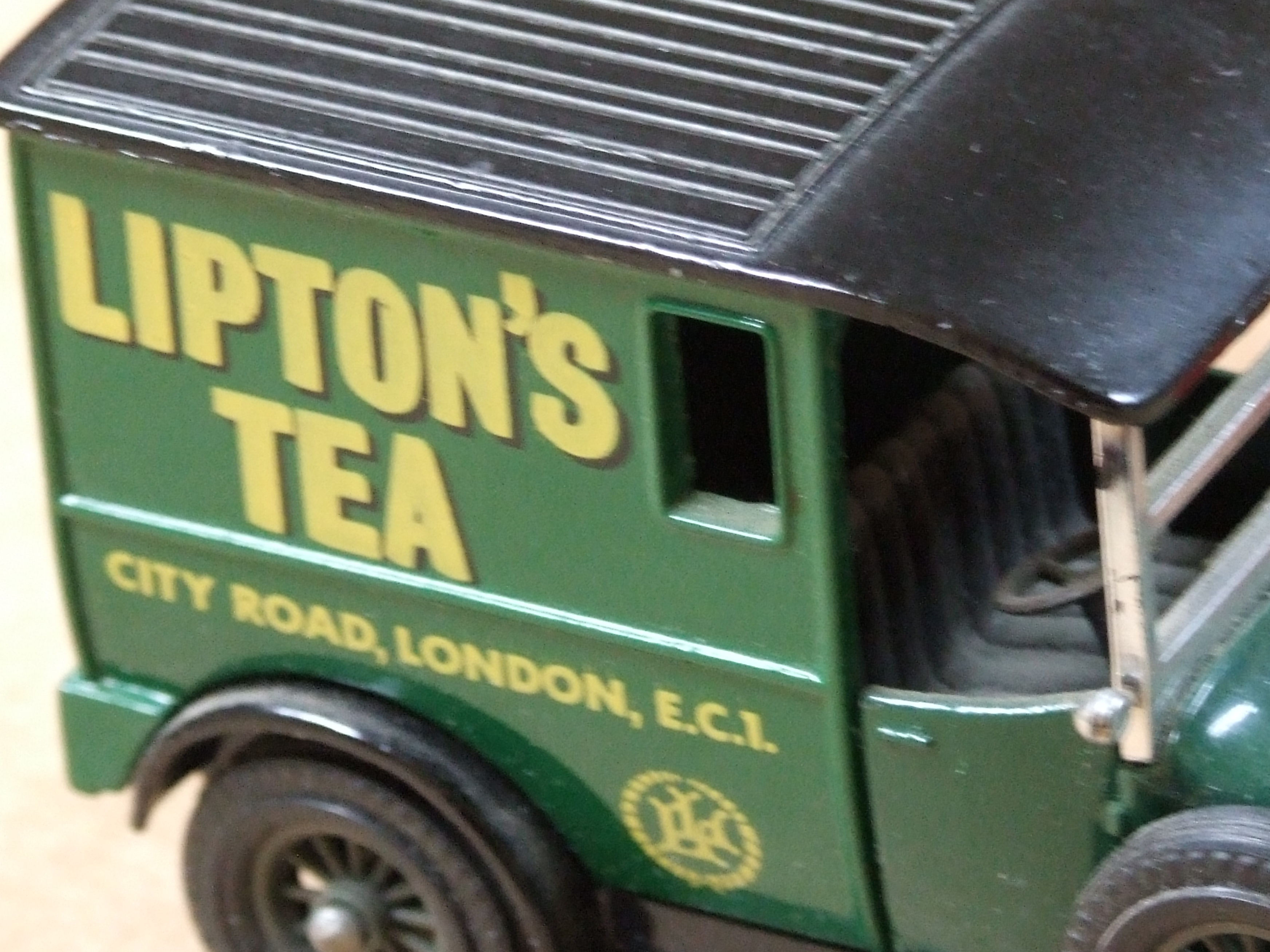
DSCF1516

Friendship with Bertie gave him open invitations to Buckingham Palace and Balmoral, Sandringham and Windsor, and the royal yacht at Cowes. He also became a friend of Princess Henry of Battenberg, ex Empress Eugenie, the King of Italy and Alfonso of Spain – who proposed to Princess Ena aboard Lipton’s steam yacht Erin. Lipton routinely put the Erin at the disposal of his royal and titled friends for cruises and parties, high jinks and trysts. Lipton as a favour to the Prince of Wales discretely created a job in his American business for George Keppel, husband of Bertie’s last and most glamorous mistress, Mrs Alice Keppel, so effectively providing her with an income and keeping her husband safely out of England. Thus, as friend and confidant of the Prince and subsequently the King, and through his business connections, Sir Thomas enjoyed the cream of English and American society throughout the remarkable Edwardian era.

Nevertheless, the Grocer did not let his business slide. His UK company paid shareholders good yearly dividends of 15% and he continued to expand his US business with shrewd dealings that impressed even the hard-nosed Americans. One deal in the Chicago stockyards where Lipton had cornered the pork futures market made him a cool $300,000. A local newspaper printed “Sir Thomas, you’re a bird. You don’t roar when we beat your sailboat, so we won’t chew the rag when you get even in a commercial way”. Lipton took a 20 year lease on a large six storey property in New York that became his US headquarters. It was to house his first complete tea packing plant there and became a launching pad for similar operations across the country. The Thomas J Lipton & Co business in America, unlike Lipton Ltd in the UK, remained under his sole control and all its profits were his own wealth.

At home Lipton was however already planning another ocean racing bid and soon launched Shamrock II as the challenger for the 1901 America’s Cup. Lipton lavishly entertained celebrities aboard the Erin and Alice Keppel was his hostess. Socialite Mrs Dana Gibson wrote to a friend “I took a real fancy to Lipton. He is so good natured and such a boy.” Columbia beat Shamrock II in all three races, but narrowly, in the total of ninety miles there was only three and a half minutes between their times.

Undaunted, and reminding listeners that “the shamrock has three leaves” Lipton soon laid the keel of Shamrock III for the 1903 series. At 14,000 square feet of sail she was to be his fastest boat yet, and the most expensive. Before the first race Sir Thomas lunched with President Theodore Roosevelt at the White House and acted as judge in a beauty contest – cleverly avoiding making a final choice (and thereby increasing his admirers) by saying of the final two contenders “It’s impossible for me to arrive at a decision as to which is the more beautiful lady – the one is perfectly charming, while the other is delightfully bewitching.” and presented each with a small golden shamrock. Unfortunately the race went badly for Shamrock III with Reliance easily winning every heat, but Lipton though privately deeply disappointed, took defeat lightly in public – where he jokingly complained that he had to drink his tea from a saucer as he was “unable to lift the cup.”

The death from pneumonia of Edward VII in 1910 marked the end of a glorious era – auspicious display, gaiety and frivolity. His son, now George V, was a different man and unlikely to surround himself with men of commerce such as the Rothschilds, the Sassoons, and Sir Thomas. Lipton however continued to serve his former royal friend Bertie by inviting Alice Keppel to stay at Dambatenne Estate in Ceylon as a refuge from publicity. Although Alexandra had invited his mistress to see Edward as he lay dying she was no longer welcome after his death. Mrs Keppel and her daughter Violet stayed in Dambatenne for three months while the press interest declined. Violet wrote later: “I shared a room with a tame snake and a wild governess.”

In the seven years since the inglorious rout of Shamrock III Lipton had taken up ocean racing with a vengeance and very successfully performed at English regattas and abroad. In 1910 he won six cups which were presented to him by Kaiser Wilhelm at the Kiel Regatta – and he had the Kaiser, noted for his ill humour, roaring with laughter over stories of his Glasgow youth. Diplomats were stunned at Lipton’s ability to put people at their ease but Lipton was now 60 and was beginning to be at odds with British politics. He felt that, unlike the USA, Britain’s prosperity was dependant on loans (even then!) and that she had imports far outweighing her exports. Lipton was starting to think more as an American as the First World War began.

Shamrock IV was built in early 1914 and was towed by Erin to Bermuda and thence to her wartime berth in Brooklyn. The Erin was painted white with a large red cross and kitted out as a hospital ship. In Yugoslavia she came under enemy fire, with Lipton on the bridge. Lipton’s presence in Serbia, bringing in a hundred doctors and nurses plus medical supplies to fight typhus, had through the publicity he inevitably attracted, the result of drawing public attention and funding to aid the appalling conditions in Serbia. Lipton was made a Grand Commander of the Order of St Sava and dubbed by the people “Tchika (Uncle) Tom”. The Erin was less successful – requisitioned and in the hands of the Admiralty she was renamed the Argusa – and was in 1916 sunk by a U-boat in the Mediterranean, steaming to help a torpedoed minesweeper, the Nasturtium. Six of Lipton’s former crew now serving on the Argusa were killed.

Next Part – Lipton’s later years – another two Shamrocks race for the America’s Cup – and the foundations are laid for a tea company that 100 years on still sells more packed tea than any other.

Tea Heroes – Sir Thomas Lipton Part Five

Reclusive and work obsessed though Lipton may have been in his earlier life, his knighthood made him very much persona grata in the best of England’s drawing rooms. At leisure, Sir Thomas had a quick wit and was an excellent raconteur. Introduced through his charity contact with Alexandra, the Princess of Wales, his natural charm endeared him to Queen Victoria’s wayward son, Bertie. Soon his life was transformed: from diligent daily toil at the office, to high society parties, ocean going yachts, and endless newspaper gossip columns. To appreciate how a working man, even a recently knighted one, could metamorphose into the friend of princes and the nobility one must first know that, after a lifetime of building and running his grocery empire as a sole proprietor, in 1898 Lipton unaccountably floated his company. The flotation was accomplished in typical Lipton style: the resultant frenzied buying of shares was dubbed by the London Evening News ‘The Lipton Scramble.’ Cleverly managed publicity and the choice of the eccentric dandy but brilliant broker Panmure Gordon resulted in the sale of the business for two and a half million pounds. Equal today to a fortune of £150 million.

While he retained nominal control of Thomas J Lipton Ltd., the transition from sole personal ownership to working on behalf of shareholders through the medium of a board of directors was an uneasy one for Lipton the entrepreneur. Now however, on his own merit he was fabulously rich, and had no pressing need to continually plough his hard won profits back into the business. Who could be surprised that, like many a lottery jackpot winner, his new found wealth would bring about a profound change in behaviour? Perhaps today we might say a ‘mid-life crisis.’ Sir Thomas was 50 years old and had built his business for 33 years – long years where his sole concern was to promote his company. Now that it was publicly owned and managed by his fellow directors, his skills turned to publicising Sir Thomas Lipton the man.

Lipton’s first foray into well-heeled society was to enter a yacht in competition for the America’s Cup. This had been contended since 1851 when a US built yacht, the America, sailed to England and challenged fifteen British yachts of the Royal Yacht Squadron at Cowes for a prize of 110 guineas and a cup. The America thrashed the British boats, sailing 8 miles ahead at one stage, and finally winning by 24 minutes with only three British yachts completing the course. Taking home the prize money and the cup, the latter was presented to the New York Yacht Club as a challenge trophy – the America’s Cup.

The green hulled Shamrock, Sir Thomas’s first America’s Cup challenger, was built on the Thames at Millwall by Scottish yacht builder William Fife. Ever the patriot, Lipton had wanted her to be built by Harland and Wolff in Belfast but their expertise was with steel hulled steam ships. The guideline budget was agreed at £100,000 – this would be £10 million today – and ultimately she would cost Sir Thomas double this price before she crossed the Atlantic. Fife designed a boat that pushed hull and sail design to the limits of contemporary technology. A gaff-rigged cutter, she had a 130 foot steel mast and was 190 feet from bowsprit to stern. While she displaced only 156 tonnes her sail area was 14,000 square feet – compare that to the 6,000 that the original America carried – and her main sails were woven from Egyptian cotton and silk, with a massive pure silk spinnaker.

Edward, Prince of Wales, who was commodore of the Royal Yacht Squadron and owner of the sleek royal yacht Britannia, took a keen interest in Lipton’s project and had undoubtedly backed his challenge which had to be formally issued through the Royal Yacht Squadron. Just two weeks after the American boat Columbia was launched, Prince Edward visited the Thames side shipyard to urge the builders to hasten completion. Columbia was owned by Nathanael Herreshoff, the designer of the previous Valkyrie defenders, but he was a dour, difficult man and no hero for the US press who went overboard in enthusiasm for Sir Thomas. His rags to riches history, his Irish forbears, even the simple patriotic name of his boat, after the difficult classical names of previous English contenders – Valkyrie, Galatea, Livonia and Atalanta – all endeared him to the common man on both sides of the pond.

Of course, none of this publicity did any harm to the grocery sales of Thomas J Lipton, Ltd., and for the while shareholders were content with the new hobby of their managing director. Come October 4th, 1899 and Shamrock was sailing well ahead when the first heat ran out of time in a flat calm, four miles from the finish. The second heat too was abandoned for lack of wind. The next attempt coincided with a thick fog shrouding the 30 mile course off Sandy Hook, New Jersey, and was again abandoned. Lipton declared encouragingly to the despairing press: ‘I can only say, that either boat may win.’ When the weather broke unexpectedly the second heat was run in a stiff breeze and Columbia finished a clear two miles ahead of Shamrock. The third race commenced next day in a bitter 15 to 20 knot north wind and just five minutes after the starting gun Shamrock’s topmast failed, bringing down spars, rigging and sail. Columbia sailed ahead and was declared the winner. In the next race the two boats were evenly matched but Columbia once more came in ahead of Shamrock and Lipton conceded defeat. ‘The better boat has won, but I have in mind to challenge again.’ Thus the yachting obsession of recently wealthy Sir Thomas Lipton commenced. Around eighty years later another notable ocean racer, British Prime Minister Ted Heath, neatly summed up the sport: ‘It’s like standing under a cold shower tearing up five-pound notes.’

Next Part – Celebrity intensifies at home and abroad; some Royal intrigue; and another three Shamrocks are launched as Lipton’s America’s Cup contenders.

Tea Hero – Sir Thomas Lipton Part One

Lipton Tea, in the distinctive yellow and red box, is instantly recognised in 180 countries throughout the world. Even a hundred years after his heyday Sir Thomas J Lipton is remembered for the shrewd entrepreneurial streak that made him millions, his publicity stunts, his hob-nobbing with royalty, and his many challenges for the America’s Cup. But what exactly made Tommy Lipton the man, ‘tick’, is as Churchill said of Russia’s intentions in 1939 “a riddle, wrapped in a mystery, inside an enigma”.

Lipton never smoked or drank, nor ever married. He never gambled yet took enormous commercial chances. As a household name familiar enough to be caricatured as Mr Tea in a popular stage play he shaped Victorian retail history, yet he took no part in politics, science, art or literature – asked once what his politics were he replied “To open a new grocery shop every week”. Until his forties he was virtually friendless and had no hobbies, often sleeping under his own counter rather than go home, yet he was to enter society as ‘one of the most eligible bachelors in the world’ and would become a close and discreet friend of King Edward VII. Without ever learning to sail he built and unsuccessfully raced five expensive yachts against the USA. Lipton was a man who had by his own endeavour raised himself from poverty to high society and who passionately believed in the power of self-help – yet left a million pounds in his will to the poor of Glasgow. A clue to the Lipton riddle can perhaps be found in one of his many after dinner speeches: “A man may have many friends, but he will find none so steadfast, so constant, so ready to respond to his wants, so capable of pushing him ahead, as a little leather covered book with the name of his bank on the cover.” This philosophy explains almost his every action – but his early life clearly shows the influencing factors that drove and enabled Mr Tea to achieve his empire.

Thomas Lipton’s parents fled the 1847potato famine leaving County Down for the slums of Glasgow. Engels after visiting the Gorbals in the 1840s wrote “I did not believe that so large an amount of filth, crime, misery and disease existed in one spot in any civilised country.” Tommy was born in 1848 during a cholera epidemic that killed 4,000 Glaswegians including his four year old sister Frances. Little wonder that to survive one had to be tough. Young Tommy thrived on the local turf wars: fist fights and narrow escapes from the police. Once he stood up to the local bully, a butcher’s son, who had been demanding protection money from children in the form of marbles. Tommy hadn’t a chance against the well fed bully and eventually his friends pulled him, battered and bloody, away from the fight. Lipton always remembered the lesson; that though he had lost the fight he had gained far more in admiration and respect. He recalled in later life “my stock soared high among all the boys of the district.”
The Clyde was all about shipbuilding and small boys in Glasgow made paper sailed models of sailing ships. Tommy organised his gang – the Crown Street Clan – in racing their toy yachts for marbles on the flooded abandoned clay pits. Tommy’s yachts were always called Shamrock.

Tommy’s family lived a precarious life. His father like many others was thrown out of his box printing job by the import trade downturn due to the American Civil War. Facing destitution, Thomas Senior, with his wife Frances set up a tiny grocery in their tenement basement selling fresh provisions shipped from friends with a farm in Ireland. Tommy left school at 13 and helped out in the shop, every week going to the dock with his barrow to collect the ham, eggs and butter from the steamer – never thinking that his name would in his lifetime be synonymous with groceries – and thereafter with tea. Yet his marketing genius was beginning to show in his advice to his father that “Mother should sell the eggs, as her hands are smaller, so it makes the eggs look larger.”

Glasgow was a busy port as well as a ship building city. A boy growing up on the Clyde heard sailors tales about far places and, throughout his young life saw waves of desperate migrants set sail for a better life in the New World. Tommy tried his hand at several jobs – printer’s errand boy and cutter in a shirt factory – but already six feet tall and strong, chafed against being confined in a routine low paid job. Through his contacts at the dock he heard that the Burns Line was looking for a cabin boy on its Belfast to Glasgow ferry. Despite this being hard work, waiting on sea passengers’ every whim, it doubled his pay and with meals on duty gave him the travel and freedom he craved. But the seventeen year old’s time on the Irish sea came to an abrupt halt when the chief steward discovered that Tommy had let a paraffin lamp go untrimmed overnight: the tell-tale smoke stain on the white ceiling betraying that his mind was on other things – listening to the old hands talking endlessly about the Americas – so Tommy was dismissed. However, long hours and free food aboard had built up some cash and his next act after collecting his pay was to invest five pounds in a steerage ticket for the SS Caledonia bound for New York. Many such lads, with stars in their eyes, slipped quietly away from family duties to make their fortunes, but through choice or failure never made the long voyage home again. Whole initially considering this as an option Tommy’s strong ties with his family ensured his winning their support, so he went with their blessing and parting tears. Without doubt Lipton saw his adventure as a necessary step on the path to success. He would later recall “The parting was sad, but my mother, at least, had such faith in me that she believed I would soon return a rich man”

Leaving behind the wretched conditions below deck for 300 migrants in steerage on a small steamer tossed for 14 days on the choppy North Atlantic, Tommy disembarked to earn his first dollar on US soil. Unencumbered by baggage he was soon off the ship and fell in with an Irish lodging house keeper. For a week’s free keep he undertook to fill Mike McCauligan’s beds and soon, back on the dock and, promising the “the best house in town” while relieving them of 10 cents a head, he shepherded a dozen of his bewildered fellow travellers to McCauligans dubious rooms.

Much like Glasgow, in 1866 the overpopulated poor areas of New York were cess pits of filth, disease and crime; recently exacerbated by the influx of 20,000 demobilised Union Army soldiers. Lipton’s first task was to find employment but in a trading city faced with war ravaged loss of markets, teeming with returned soldiers and hopeful immigrants, the competition was severe. Despite the many attractions of New York Lipton faced the reality of his precarious position and rather than spiralling down into drink and squalor as did so many immigrants, decided to go south to Virginia, where the Civil War and abolishment of slavery had caused labour shortages on the plantations. However he found that tobacco farm hands were worked just as hard as the slaves had been but, true to form, Tommy Lipton took on extra duties and saved a little money. He might have continued there but for an accident with an axe that nearly severed his foot. Nursed back to health by his employer’s wife, Tommy decided on a change of scene and gained a job on a South Carolina rice plantation where his literacy and rudimentary book keeping skills gained him a clerk’s position. Coincidentally the rice plantation was very close to where, a century later, T.J Lipton Inc. as part of Unilever, would set up their tea research station, now owned by the Bigelow family and operated as Charleston Tea Farm – “America’s only commercial tea garden”

Back in New York Tommy was to place his foot on a significant rung of the ladder to his success: he landed a job in a Scottish department store. The owner A.T Stewart whose commercial success came from his compulsive competitive drive, rigorous staff discipline and attention to detail would inspire the young Lipton. He took well to retailing, enjoyed selling groceries to customers, and noted the influence of Stewarts’ presentation of goods and the effect of customer service – and the power of advertising. The observant Lipton’s two years’ of 12 hour days in various departments at Stewarts was today’s equivalent of an MBA. Macy’s too was thriving just a block away. Macy was a friend of circus owner PT Barnum who dreamed up many of Macy’s advertising stunts and aggressive promotions. Tommy saw and absorbed all this and, with $500 in his pocket (a large sum then) and the bushy moustache that would soon make him instantly recognisable, he returned to his parents in Glasgow determined to become a merchant showman – and millionaire

Next week Part 2: bizarre stunts, opening up a new shop every week, and venturing into tea.

Tea Heroes The Twinings Tea Dynasty: Part One

Twinings hit the headlines this week by substituting a new fangled Earl Grey blend for the 180 year old traditional recipe. Outrage among devotees has seen the reinstatement of “Classic Earl Grey” – but what is the history behind a tea company that has been in the same family for 10 generations?
Twinings is one of the world’s iconic tea companies. Old by any standard, it was established in London by Thomas Twining in 1706 and has remained in the same family ever since. Today, Stephen Twining is the tenth generation family member to work for the still expanding company, with its tea selling now into more than 100 countries.

In a few hundred words we can barely scratch the surface of the history of a tea company that has traded for three centuries, but in Part 1. of the saga we can at least record how Twinings Tea began business and follow its progress during the reigns of Charles II to George IV.

Back in the 17th Century the Twinings family were weavers and cloth fullers in Painswick near Gloucester, though they were named through having family connections with the tiny ancient Gloucestershire village of Twyning – near Tewkesbury, so called from Saxon times because it was ‘tween the Rivers Avon and Severn. Around 1680 a bad recession in the wool industry caused Thomas Twining’s father Daniel to uproot his family to try their luck in the London weaving trade. Young Thomas was born in 1675 and was apprenticed to his brother, a London lace maker, at the unusually advanced age of 19, probably to qualify him for becoming a Freeman for which a Guild trade training was necessary. Through hard work he progressed, and by the age of 25 was working with a wealthy East India Company merchant Thomas D’Aeth, and through his patronage was elected as a Freeman of the City of London in 1701. The East India Company imported many tropical commodities including spices, coffee and tea, about which Thomas learned sufficient to start his own tea and coffee business in 1706, during the reign of Queen Anne, by purchasing ‘Tom’s Coffee House’. This was situated in Devereux Court at the back of 216 Strand, strategically placed between the City trade and the Westminster aristocracy who had deserted the City after the Great Fire. The very same premises in the Strand remain today as Twinings’ London Tea Shop and Twinings’ museum.

There were of course many tea and coffee shops in London – by 1683 over 2,000 coffee houses were recorded, but Thomas Twining’s marketing niche was fine tea – or speciality tea as we would call it today. As his reputation for offering only the finest teas grew he attracted royalty and gentry as customers – not all of them good payers however – Hogarth the artist was often short of money because print sellers avoided paying him royalties and on one famous occasion could not meet his mounting tea bill at Twinings. Instead, he bargained with Thomas Twining who agreed to let Hogarth paint his portrait in lieu of payment. That portrait still hangs in the Twinings museum. Twining’s earliest sales ledgers are from 1715-20 and show tea prices during this period of 14 to 20 shillings per pound for Green Hyson, and 36 shillings for Finest Hyson. Coffee at 4 shillings per pound and drinking chocolate were much cheaper, the most popular chocolate being 2 shillings and 9 pence per pound, with brandy far cheaper than a pound of tea at a very reasonable 12 shillings per gallon!

When Thomas Twining died in 1741 his son Daniel took the reins and commenced an export business to America where ironically the Governor of Boston was one of his customers. Daniel Twining’s wife Mary succeeded him in 1762 and ran the business with considerable skill until her son Richard took over in 1771.

Young Richard Twining exerted a strong influence on both the company and the trade. The latter half of the 18th Century saw high taxation of tea and a great deal of smuggling – an activity that Twinings proudly boasted they never got involved in. Richard Twining became the Chairman of London Tea Dealers and argued that high taxes were the cause of tea smuggling. Prime Minister William Pitt was sufficiently persuaded by the trade’s argument that the government would earn more revenue if taxation was reduced, and the tea tax was slashed from around 80% to 12% by the Commutation Act of 1785. Tea prices to the consumer fell by nearly 3 shillings per pound overnight and tea consumption leapt – this increased Twinings’ sales and reputation as well. For the record, Pitt balanced the loss of tea tax by introducing the window tax – this was much more difficult to avoid. However, by 1819, to raise cash for fighting Napoleon, the tax on tea was back at 100% of the sale price.

In 1787 the Twinings name became what we would now call a brand. Thomas Twining’s grandson Richard built a handsome doorway to 216 Strand incorporating his grandfather’s ‘Golden Lyon’ symbol with two Chinese figures. The doorway survives today, surmounted by the Twinings name carved in the stonework in a distinctive font and without an apostrophe. Richard Twining had invented the concept of the logo – and one which still appears on the company’s tea packets today – exactly the same spelling and typeface has been used by the company ever since. In fact it is the world’s oldest logo in continuous use.


Richard Twining and his wife Mary were blessed with five sons and three daughters. Three of his sons joined Richard and his brother John as partners in the business – Richard Twining Jnr. in 1796, George Twining in 1805 and John Aldred Twining in 1811. During this period Richard Snr. was twice elected to the prestigious position of a director of the Honorable East India Company (1810-14, and 1815-17). This was despite his always taking a firm stance against the East India Company’s monopoly position as tea importer. A notable example of this was in December 1784 when at the East India Company’s quarterly tea sale some tea dealers objected to several lots of tea that had been damaged by sea water, and asked that these musty chests be withdrawn from sale. The Company withdrew 23 chests while the dealers had asked for 1,300 to be removed. Richard as Chairman of the Tea Dealers advised them to refrain from bidding for any tea. The Company retaliated by bringing in a silk broker to bid for the tainted tea and to sell it to the public by undercutting tea dealers’ prices. By the following April Richard had circulated a letter to his customers reassuring them that while “the East India Company have persisted in offering to Sale a considerable quantity of Tea that is musty and mouldy” that Twinings had “not purchas’d a single Chest of tea of any of the above mentioned descriptions” and that his customers “may depend upon every possible attention on our part, to supply them with the best Teas, at the most reasonable prices”.

Richard Senior retired in 1818, and by 1825 under his sons’ control the Twinings tea business had diversified into banking. In previous generations the Twinings business had banked with Hoare’s Bank in Fleet Street but now was sufficiently secure financially to establish their own Banking House, also in Devereux Court behind 216 Strand. This innovation became so popular that by 1835 the ‘Observer’ recorded that they had “erected a more commodious banking house in the Strand close to their celebrated warehouse”. There was a connecting door from bank to shop and cashiers were often asked to change cheques partly in cash or notes and with the balance in tea. Service indeed!

In Part 1. we have followed the Twining family and tea business through nine Reigns – in Part 2. we shall follow Twinings’ remarkable development through a further six Reigns.