
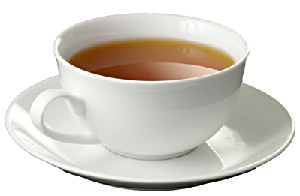
The professional taster uses all his senses when checking a tea (this is called organoleptic assessment).
He looks at the dry leaf, feels its density, and crushes some and listens to the crackle to assess the moisture content.
He sniffs the wet leaves for aroma and checks them for colour and consistency.
Only then he turns to the liquor. Using a silver spoon, he lifts lukewarm tea to his lips and sucks in air through the tea causing some of it to vaporise into his throat. This allows the aroma to be sensed by the back of his nasal cavity, whilst the remaining liquid is squeezed along the sides of his tongue to sense the taste and thickness.
Finally he spits the tea into a spittoon - swallowing 300 spoonfuls an hour would just be too much tea!
The home tea taster should also use all their senses.
First examine the dry leaf
Visual - look at the colour of the leaf. Is the grade even? Is it true to type? Is there 'tip' present? Is it pleasing to the eye? A good tea has all these factors.
Smell - sniff the dry leaf. Does it smell as you expect or is there any taint, smokiness or hay aroma? (These are indications of poor manufacture and/or long keeping) or is it musty? (This indicates high moisture) or oily? (This indicates oxidation). While there are many different typical aromas a good tea should always smell sweet and fresh.
Then on to the liquor
Look - with the eyes
Brightness - for black and white teas the liquor should be clear without cloudiness - you should be able to see the bottom of your mug or tasting bowl - and the surface should be reflective. This is called brightness. Green teas are allowed a little cloudiness in the cup.
Colour - black teas will have a colour typical for their type. Assams are reddish brown. Kenyans and low grown Ceylons a golden orange. High grown Ceylon is more yellow. Darjeelings are golden yellow. Green teas will be yellow if they are from China, pale green from Japan. Oolongs are generally a pale orange brown.
Smell - with the nose
Aroma - there are more than 200 aromatic compounds in tea and every tea type has a different balance. When you recognise a tea from its aroma you are comparing it with a remembered aroma picture. With time and practice you will build up a memory store of good (and not so good) aroma pictures. The aroma will generally tie in with the tasted flavour.
Taste - with the palate
Astringency - most good teas show a little astringency (a puckery effect on the tongue and mouth). It gives tea its refreshing character and, at higher levels (required if milk is to be used) it is called pungency.
Body - the thickness or heaviness of a liquor is called the body - it is a useful characteristic. Without it a tea is termed thin.
Bitter - a little bitterness is a good character but it can be overdone.
Flavour - a combination of the above characters with tasted aroma. Flavour should be typical of the tea type and should be balanced and may be complex - combining several characters with no one dominating. A good tea will have brightness, clear colour, strength and thickness. A poor tea may be thin, cloudy and brown. An over-fired or burnt tea will have the acrid taste of burnt toast - it is a common fault in tea.
Recording
If you make a written note of your tea tastings it will improve your technique and help to develop your skills. Over time, it becomes a fascinating record of your developing palate and preferences.
Learning More
Use our web pages on Brewing and our Glossary to assist you with terminology, and remember that you can always ask us questions by email: [email protected]
This part of our site does not use cookies, or store any tracking information on your computer. However, if you go to the shop we will need to use cookies in order to keep track of what you've added to your shopping basket, and some other essential information. To learn more about cookies and online tracking, you can check out the ICO pages.