
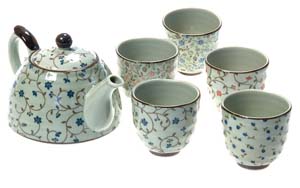
What is Tea?
Tea is made from the leaves or buds of the tea bush Camellia sinensis. It is commonly consumed in the form of a beverage made by steeping it in hot water for a few minutes.
The name tea derives from the Chinese 茶, pronounced te in the Min Nan dialect. The flavour of the raw tea is developed by processes including oxidation, heating, drying and sometimes by the addition of other herbs, spices, or fruit. Tea is a natural source of caffeine.
The term herbal tea usually refers to an infusion of fruit or herbs, which contains no actual tea. Rosehip tea or chamomile tea are examples of this. The words tisane or herbal infusion are better ones to use, emphasising their difference from actual tea.
Health Benefits of Tea
Tea provides health benefits and is health promoting
FACT. There is growing medical evidence to confirm what the Chinese have believed for 5,000 years - that tea promotes good health - and can protect you from many of the awful illnesses that mankind faces today. These tea health benefits come largely from the very high level of unique natural antioxidants contained in tea. While the exact protective mechanisms are still not fully understood, it is generally agreed that tea drinking benefits health.Tea Health Benefits - Facts or Fallacies?
- Fact Tea protects against a whole range of conditions
- Fallacy Only Green Tea contains antioxidants
- Fallacy You need to drink enough tea to fill a bath to get protection
Tea protects against a whole range of conditions
FACT. And more are being added every day. Regular consumption of tea has been associated (in vivo and/or in vitro evidence) with protection against some cancers including lung, stomach, breast and skin cancers, as well as showing anti-inflammatory, antithrombotic, cholesterol lowering, antiviral and antibacterial properties. There is growing evidence showing a beneficial relationship between drinking tea and a reduced risk of cardiovascular diseases such as stroke and heart attack. A recently demonstrated added benefit is that tea drinking on a regular basis can help fight obesity as it can speed up the burning of fat calories.
Only Green Tea contains antioxidants
FALLACY. Both green tea and black tea have the same total level of antioxidants (called polyphenols or flavanoids). The type of polyphenol differs - green tea has simple flavanoids called catechins, while black tea has more complex flavanoids called theaflavins and thearubigins. But forget the scientific names - just remember that teas of whatever colour are the richest sources of flavanoids - and all flavanoids are believed to provide health benefits. With different types perhaps protecting against different diseases a mixed daily intake of both green and black tea is probably the wisest course.
You need to drink enough tea to fill a bath to get protection
FALLACY. Various studies indicate that good health benefits come from drinking just 3 to 5 cups of tea per day. No irksome task when tea is available in so many delightful types, colours and flavours - and, apart from tap water, is still the cheapest beverage in the world.

This part of our site does not use cookies, or store any tracking information on your computer. However, if you go to the shop we will need to use cookies in order to keep track of what you've added to your shopping basket, and some other essential information. To learn more about cookies and online tracking, you can check out the ICO pages.