The post Tasting Lumbini Teas appeared first on Tea Musings.
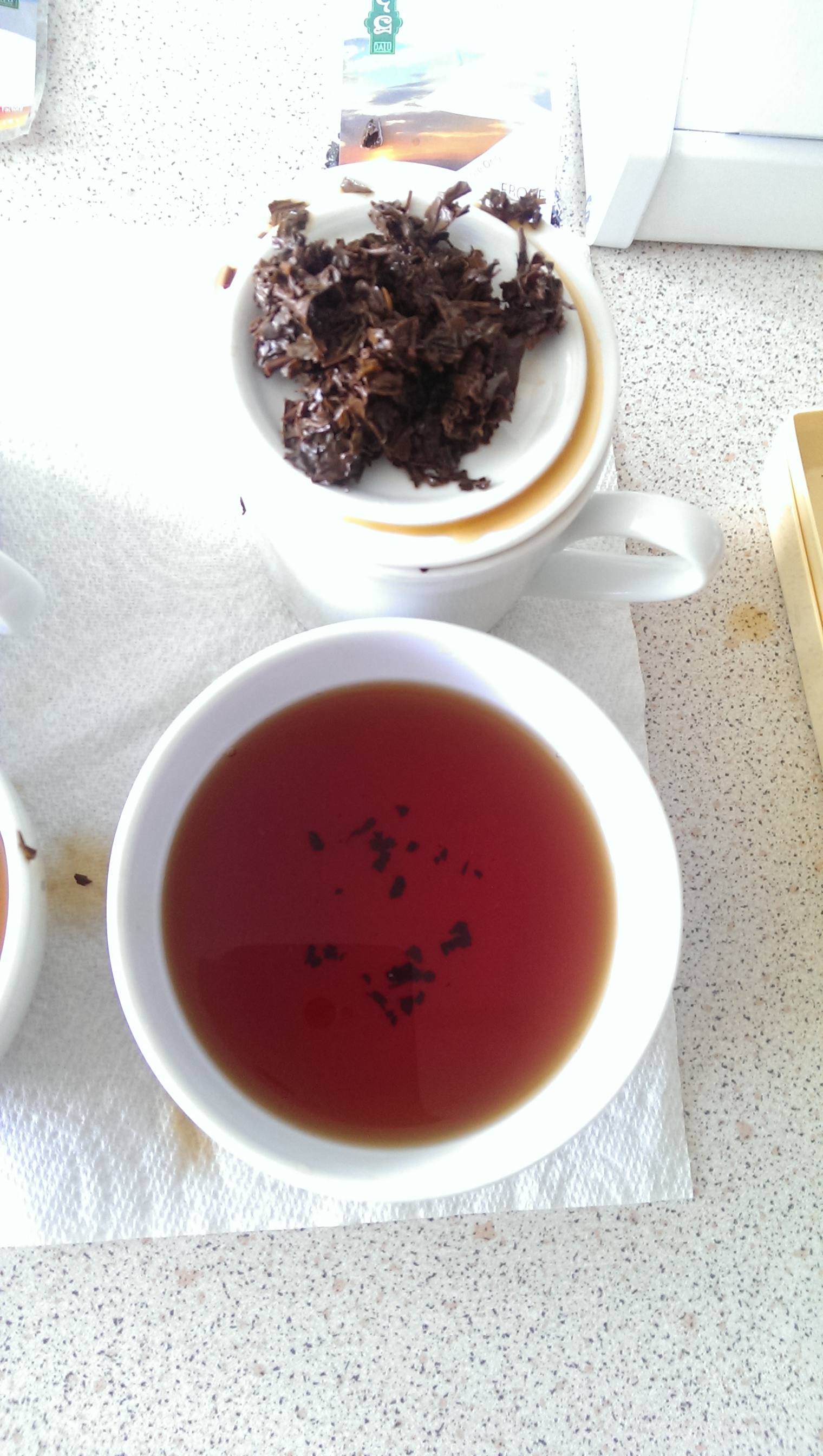
]]>They are from the Lumbini Estate in Sri Lanka. It is a beautiful looking factory nestled in woodlands (the Sinharaja forest reserve).
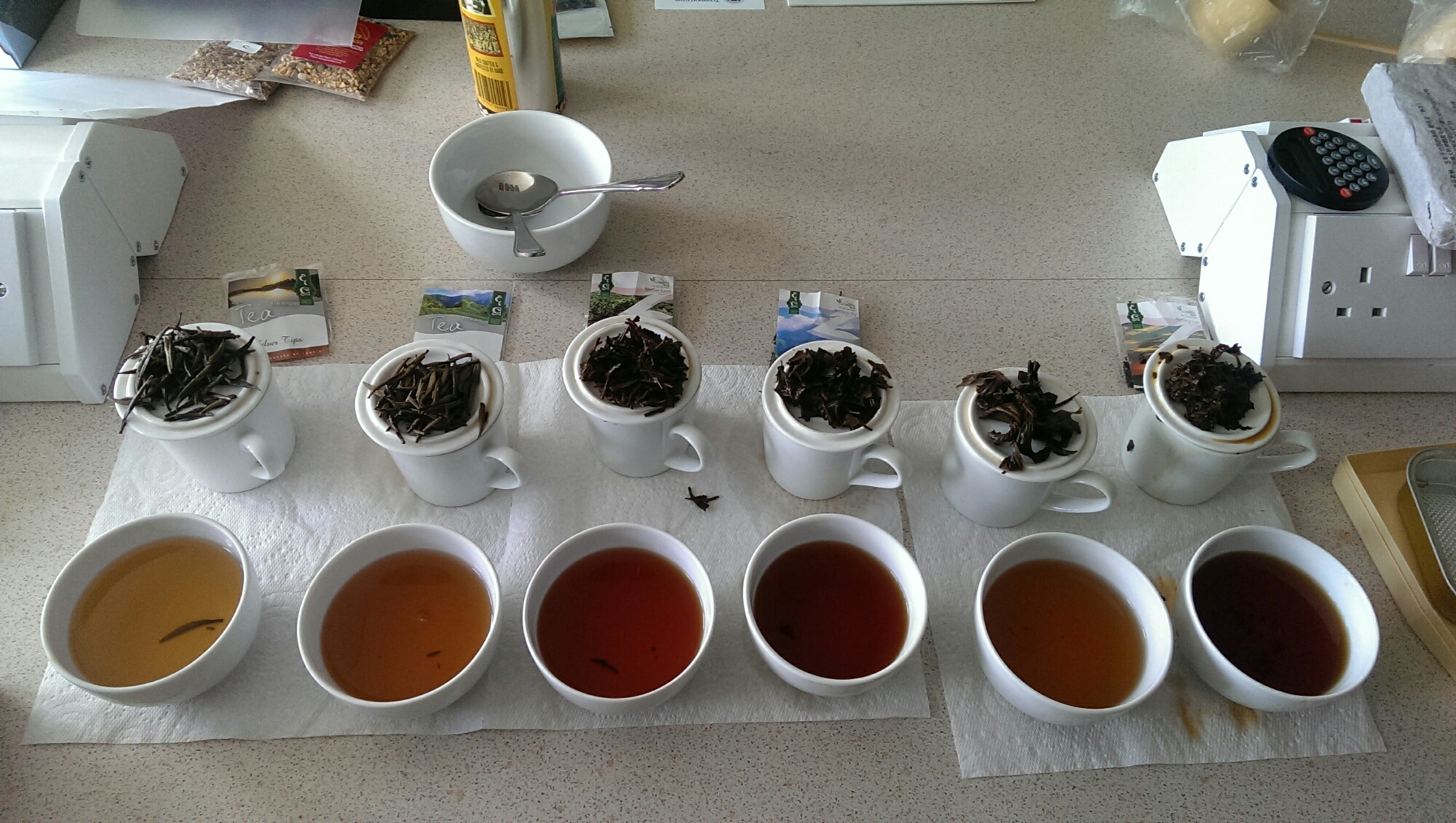
Teas left to right.
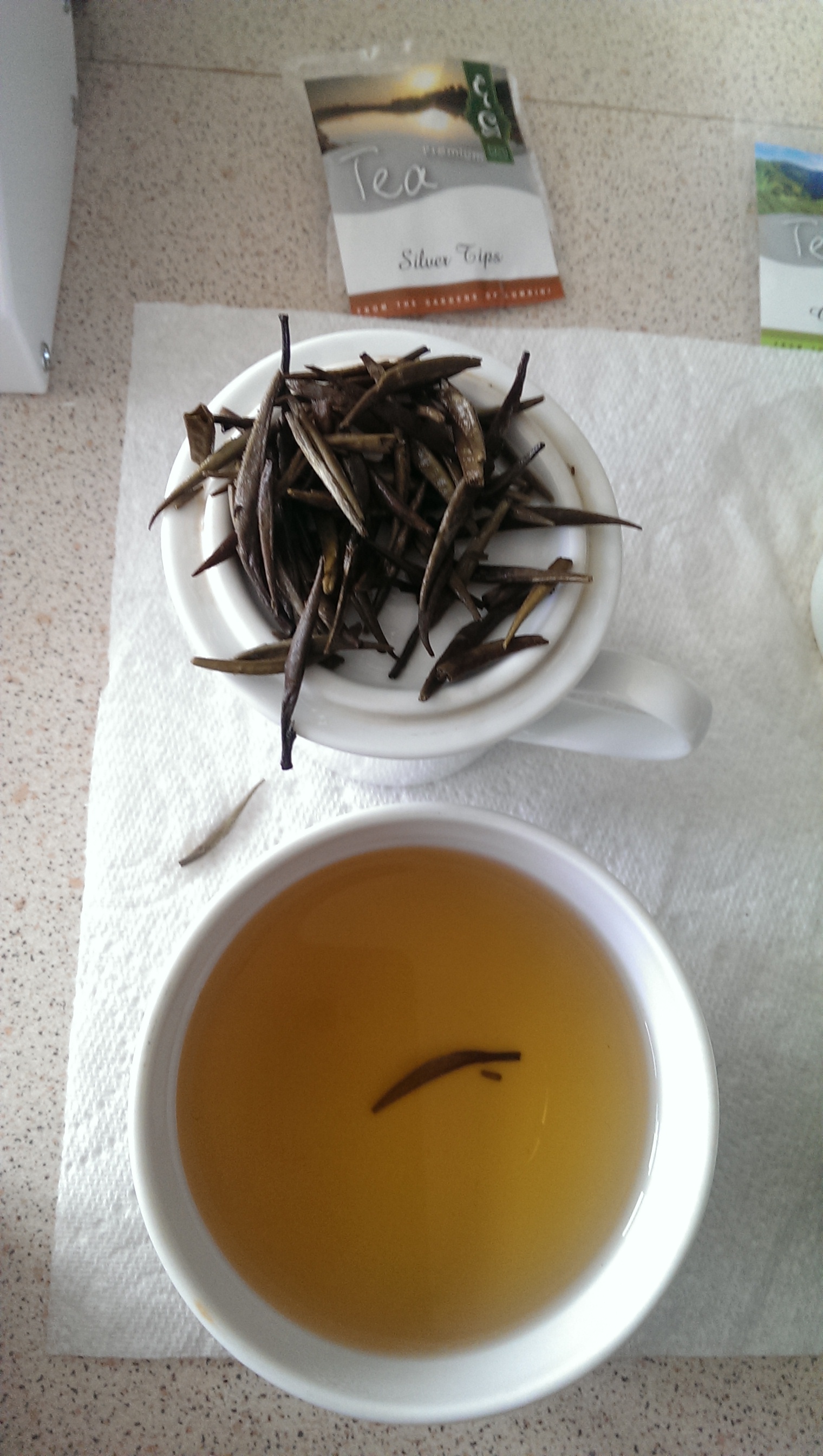
Silver tips
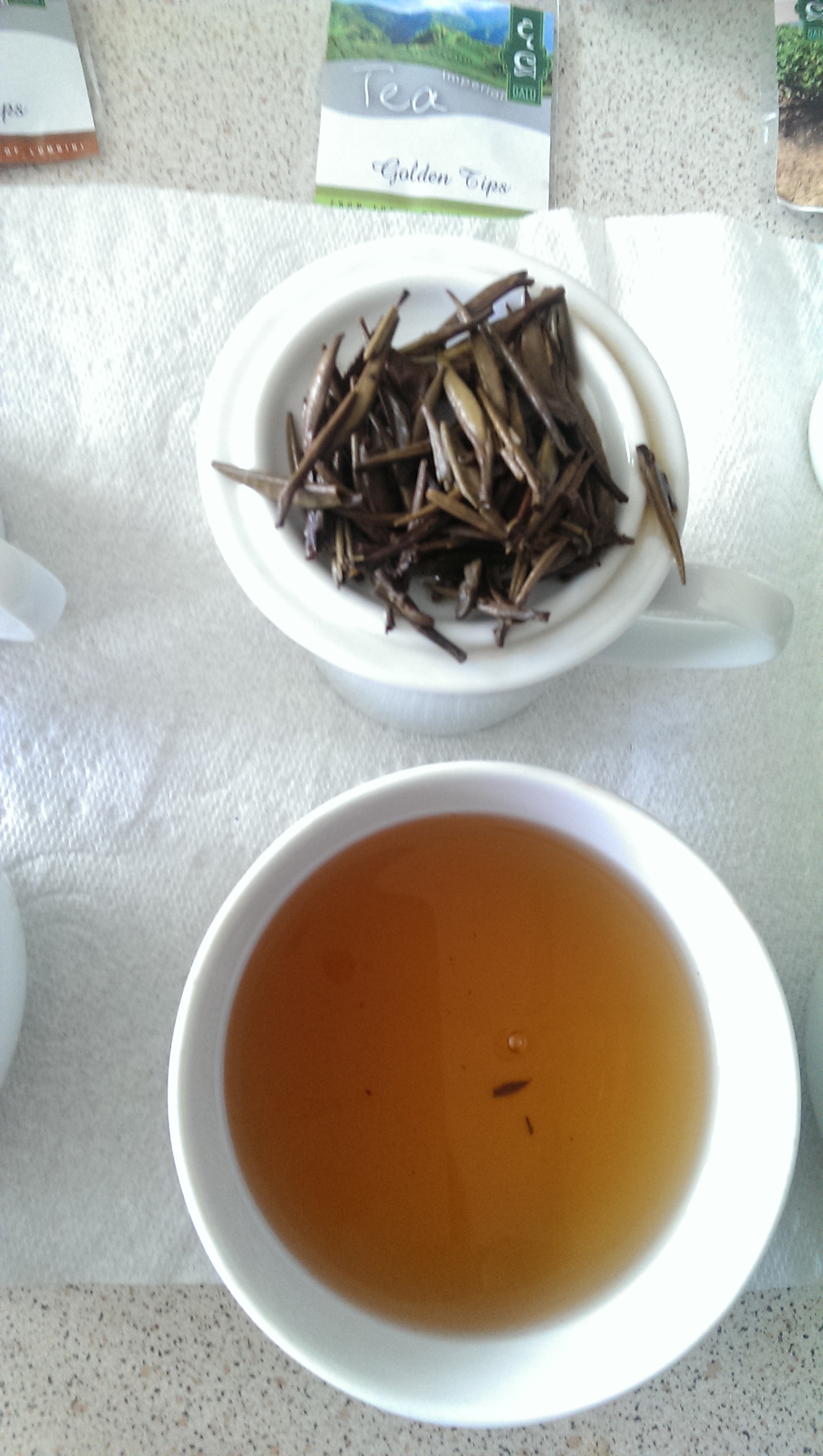
Golden tips
Mother earth OP1
Endless sky FBOP
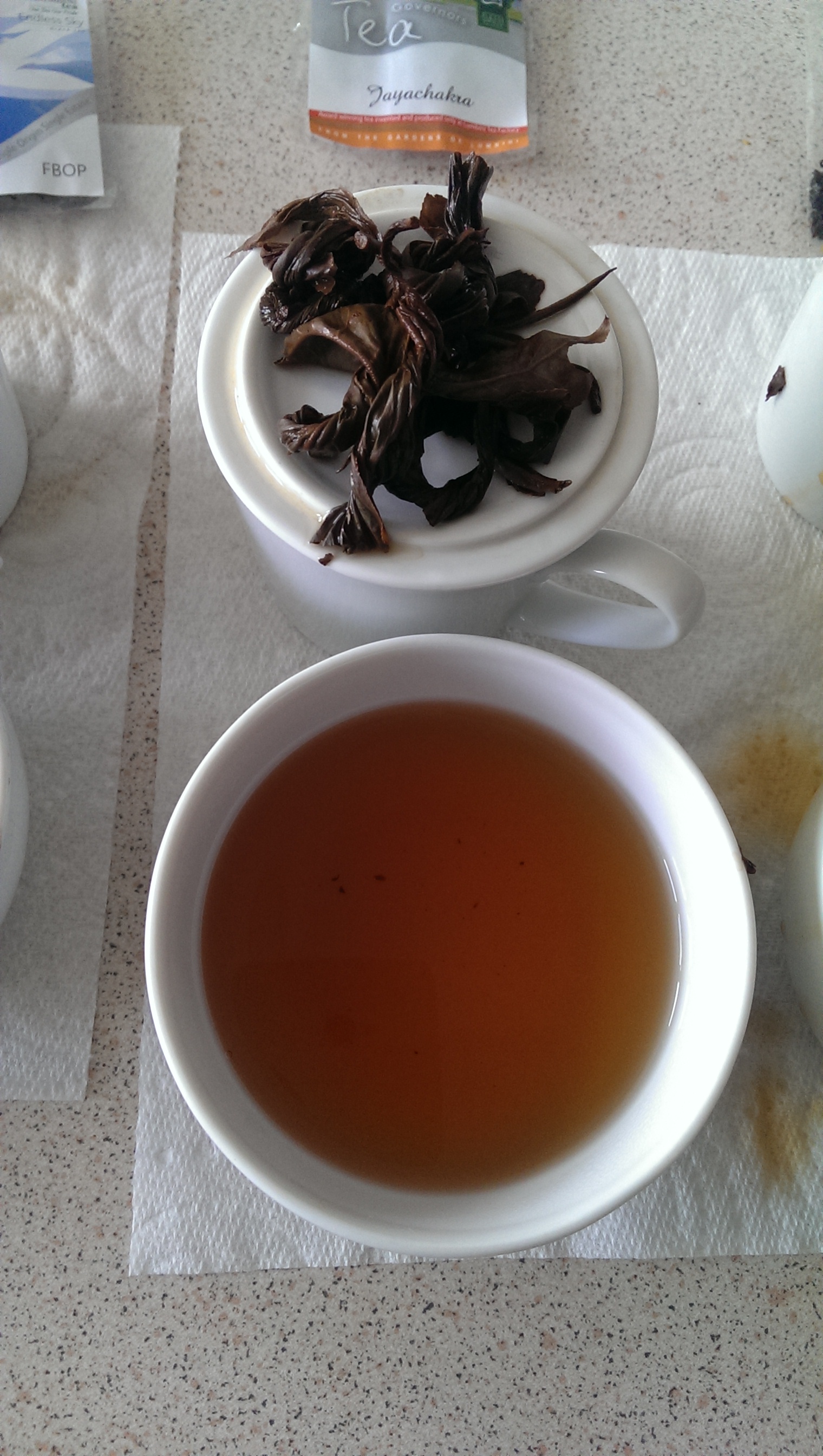
Jayachakra
Burning Sun FBOPF
I’ve not tasted a good Ceylon Silver Tips for a few years now. So this was a real treat.
The Golden Tips were also good (the Roving Teaman preferred them over the Silver)
Mother Earth and Endless Sky were both excellent brews as well. Full of bright colours, crisp floral notes, and generally a delight to taste.
The Jayachakra tea is unique to the Garden. It is two whole leaves and a bud, formed carefully into a ring. It has a lighter colour and is a gentler infusion. It is a special tea, for special occasions when you have got the time to savour the flavours and bouquet.
Last but not least is Burning Sun. This is a pretty amazing brew. It is strong, would take milk if you wanted it, packed with flavour, yet gentle, not bitter, has great mouth feel. It has to be one of the best Ceylon’s we have tasted.
I can’t yet say that these teas are coming soon, though I do hope I can in the near future. You are going to love them.
The post Tasting Lumbini Teas appeared first on Tea Musings.
]]>The post Meet Natela – Our Georgian Old Lady appeared first on Tea Musings.
]]>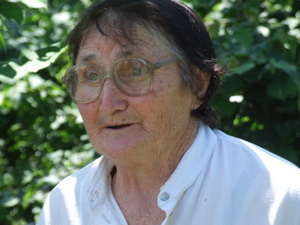
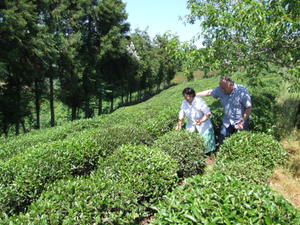
During Soviet times Natela worked at the local State Tea Farm. When long ago she married a village boy her new mother-in-law taught her to pluck tea and, over the years she progressed to field supervisor. Her sister was also a tea worker at the tea factory and was sent to China as part of her training. All the tea produced in Georgia was destined for the samovars of Soviet Russia so while surrounded by tea during the day the factory workers had no tea to drink at home – and security at the factory was strong. However, the fields were unguarded and, like many of their fellow tea workers Natela and her sister would steal green leaf from the bushes at the weekend and hand make tea at home. Just as now the green leaf would be withered in the shade of a farmhouse veranda and when ready would be put into the washing bowl for hand rolling. On to overnight oxidation covered with a damp towel and then out into the strong Georgian summer sun to dry.
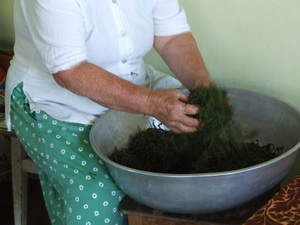
Since Georgia’s independence in 1991 Natela has taught a whole new generation of her fellow villagers to hand make tea and many are now members of the Georgian Hand Made Tea Makers Association. Some use small locally made electric powered rolling tables to do the hard work of rolling but Natela still crafts her teas completely by hand. In a year she can produce about 220lbs all of which is purchased by More Tea Ltd. Natela’s granddaughter is now at university and, unlike it was in Soviet times, this is no longer free. With the proceeds of her tea sales Natela is paying her granddaughter’s university fees – when she graduates Natela thinks she may retire – but it’s difficult to believe.
The post Meet Natela – Our Georgian Old Lady appeared first on Tea Musings.
]]>The post TEA TALK: A Safari through Kenyan Tea appeared first on Tea Musings.
]]>Kenya is situated on the east coast of Africa, a tropical country straddling the equator, the warm Indian Ocean to the east, and huge fresh water Lake Uganda to the west. Note that fifteen other African countries are also tea producers large and small – though Kenya produces more tea than all the rest added together – last year topping 300,000 tonnes for the first time.
Tea is naturally a plant of the moist tropics. On the equator and at sea level the temperatures are far too hot for tea to grow. Fortunately, Kenya has plenty of high land on both sides of the Rift Valley where, at elevations from 4,500 up to 7,000 feet the air is cool and rainfall is plentiful; combined with the rich acid volcanic soils the intense natural light and high humidity, the conditions are ideal for tea. In Kenya the tea growing conditions uniquely combine quality with quantity. In the 400 square miles that are carpeted with tea there are over 1 billion tea bushes growing, and every one of those bushes is visited every ten days by a trained tea plucker who selects just the newly grown tips for harvest. No harvesting machines operate here – just human skill. At 1,500 tips per kilogram a plucker will select and pluck over 30,000 per day! The Kenya tea industry is vast and, because it is labour intensive, it can achieve the very best quality.
The ongoing peaks and dips in tea prices at the Mombasa auction affect a lot of lives. Out of Kenya’s 25 million population over 12% are involved in the tea industry in some capacity, and half a million are directly employed in producing tea. KTDA – the Kenya Tea Development Agency, is a huge co-operative of small tea farmers established in 1965 (before then only multinational companies were allowed to grow tea). Now KTDA has 430,000 individual farmers growing and selling green leaf to the 55 tea factories it manages. An amazingly complex and successful undertaking that operates effectively despite all the problems found in a developing country.
Kenya was a late comer into the world tea scene with the earliest commercial plantings made in the 1920’s – compare this with China’s 5,000 tea history, Indonesia from the 1700’s, Indian production from 1830, and Sri Lanka from 1870. Brooke Bond still pluck from the original bushes planted just north of Nairobi. Commercial production took off exponentially in the 1930’s and now Kenya teas feature in virtually all UK tea blends. Kenya’s spectacular export growth is the more impressive when compared with India for example where growth in exports has only been 20% in 70 years (160,000 tonnes exported annually in 1930’s and 210,000 tonnes per annum now). To support this spectacular and consistent growth the Kenya industry has pioneered and perfected many innovations in tea production, like the withering trough, continuous fermentation, the CTC and the fluid bed drier, and giant tea factories that give economy of scale.
Multinational companies grow about 40% of the Kenyan tea with small farmers under KTDA guidance growing the bulk. KTDA has 55 out of the total tea 98 factories. Kenya’s tea factories are on average four times as large as those in Sri Lanka and six times as big as those in Assam.
At the tea auction that is held in Mombasa every Monday and Tuesday, tea is sold by the producers and is bought by local and international packers. Big names Lipton, Brooke Bond, Van Rees are represented there, plus many small brokers and traders. Before the auction commences they will have seen and tasted tea samples from each of the lots and will bid for their requirements. Some 70% of Kenya’s tea passes through this auction with the remainder sold by private treaty. The Mombasa auction attracts tea from surrounding countries too – Uganda, Tanzania, Malawi, Burundi and Rwanda. All these are then shipped worldwide from Mombasa port for blending and packing in consuming countries.
Of the 300,000 tonnes of Kenya tea produced only 7% is retained for local drinking. For the rest there are three main customers – UK, Pakistan, and Egypt, who together purchase nearly three quarters. US consumption of Kenya tea is very small – of the 46 billion cups drunk in USA only 800 million are grown in Kenya. The main reason for this small uptake is that Kenya grows high quality CTC black tea. This is ideally suited to England’s “strong tea with milk and sugar” taste but is not so popular with Americans and most Europeans who drink their teas without milk. Prior to WW2 the US drank equal amounts of green and black tea of orthodox manufacture; but since then tastes have changed towards iced tea that now forms 70% of the US tea market.
With the rising popularity of the teabag Kenya has since the 1970’s (as has the rest of Africa) concentrated solely on black CTC tea – but globally this is fast becoming an oversupplied and stagnating market. KTDA is known for making the very best quality of CTC teas and has recently diversified into producing fine specialty leaf teas using traditional orthodox tea equipment imported from India.
The post TEA TALK: A Safari through Kenyan Tea appeared first on Tea Musings.
]]>